Distinguished Lecture Series
The Distinguished Lecture Series (DLS) is a monthly program designed to bring thought leaders, innovators, and subject-matter experts together with our technical community to foster dialogue around cutting-edge science, engineering, and defense technologies.
​
Hosted by the High Desert Tech Bridge in collaboration with Future Labs and the Naval Air Warfare Center Weapons Division (NAWCWD), this series offers a platform for speakers to share insights, exchange ideas, and explore opportunities for collaboration.
​
As part of the NavalX Tech Bridge network—a nationwide initiative by the U.S. Navy—the High Desert Tech Bridge serves as a hub for innovation, connecting the Department of the Navy with nontraditional partners including startups, small businesses, academia, and other defense organizations. Our mission is to accelerate the transition of emerging technologies into operational capabilities for the Navy and Marine Corps.
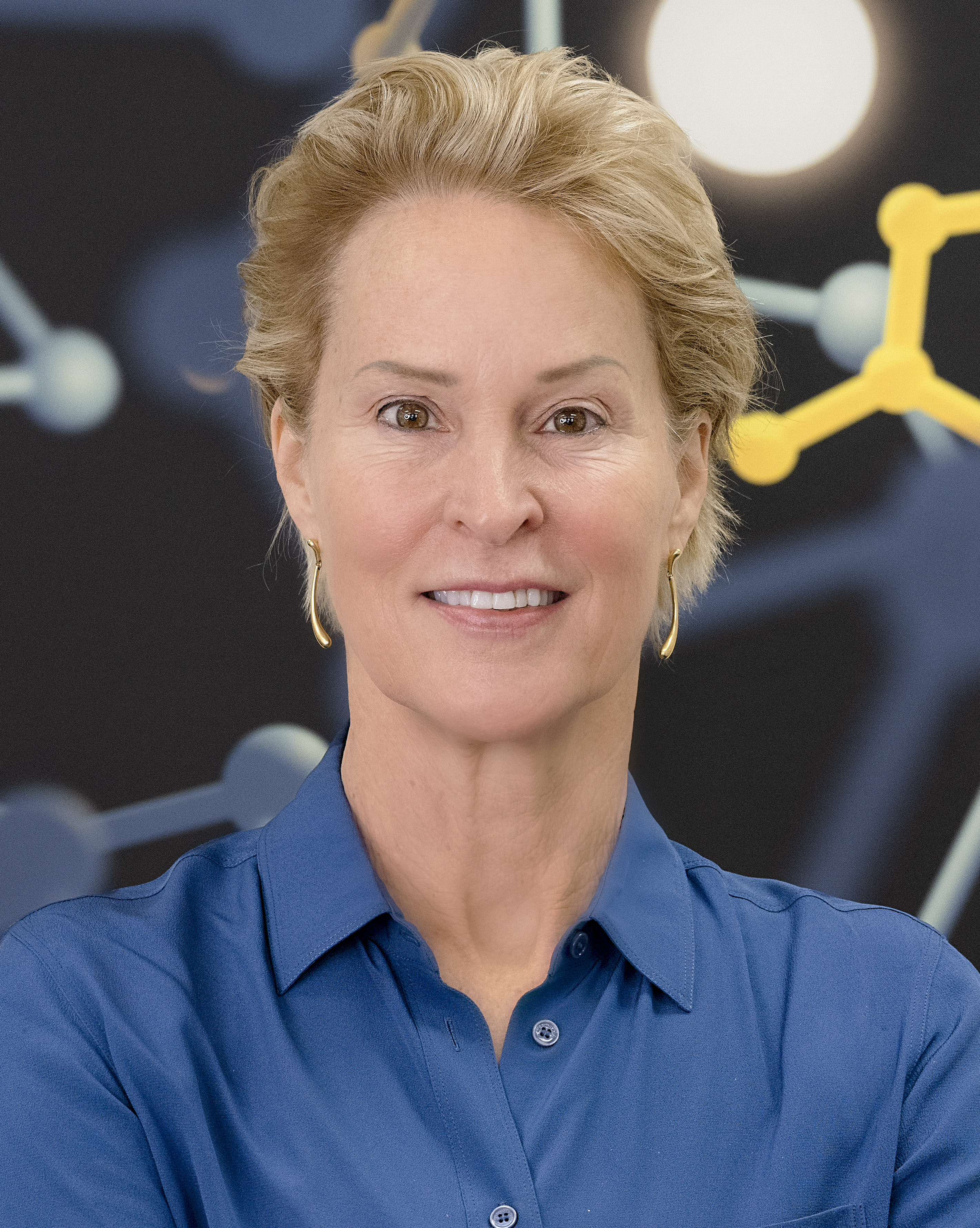
Phil S. Baran, PhD
January 26, 2026
Polar disconnections are intuitive and underlie much of retrosynthetic logic. Undergraduates exposed to multistep synthesis are often taught to assemble organic molecules through the combination of positively and negatively charged synthons because, after all, opposites attract. In- deed, the most employed two-electron C–C bond forming reactions today are those either based upon classical cross- coupling reactions (e.g., Suzuki, Negishi, Heck) or polar ad- ditions (aldol, Michael, Grignard). These reactions are the mainstay of modern synthesis and have revolutionized the way molecules are constructed due to their robust and pre- dictable nature. In contrast, radical chemistry is sparsely covered beyond the basic principles of radical chain processes (i.e., radical halogenation). The historical perception of radicals as somewhat uncontrollable species does not help the situation. As a result, synthetic chemists are not prone to make radical-based strategic bond disconnections during first-pass retrosynthetic analyses. In this talk recent studies from our lab will be discussed to illustrate the strategic advantages that can result when unconventional radical disconnections are incorporated into synthetic design plans.

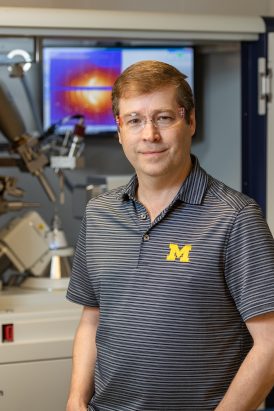
Graham Cooks
February 23, 2026
Two publications from this lab, in 2011 and 2012, used mass spectrometry to show that the rates
of reactions in microdroplets are accelerated by many orders of magnitude. These experiments used ordinary organic solvents and demonstrated that acceleration occurs at the solution/air interface. These observations were then extended to a range of classical organic reactions. The Zare group showed reaction acceleration in aqueous microdroplets, for oxidation and other reactions. This presentation covers three topics. (i) The mechanism of acceleration which involves partial solvation at the interface (solvation is more important in
the reagents than the transition state in bimolecular reactions, so increasing rate constants) as well as highly reactive species derived from water radical cation, H2O+.
The application of reaction acceleration in chemical analysis and especially for synthesis, both for scale-up (g/h) and for small-scale high-throughput reactions (1 Hz) for drug discovery (Figure). Thousands of new compounds are generated per hour allowing rapid screening, collection, and
bioactivity testing of nanogram amounts of new drug analogs. (iii) The implications of accelerated microdroplet reactions in prebiotic chemistry and
the origin of homochiral life.